
Case study · Self-initiated with Jen Ray · 2026
The Ray Family Story
A thousand pages of one man’s handwritten research, turned into a graph — and from that graph, a 326-year history that can be read, searched, and walked through.
The brief
Jen’s family history existed as well over a thousand pages of one man’s research. We set out to turn it into something a family could read, search and keep adding to — without losing a single citation along the way.
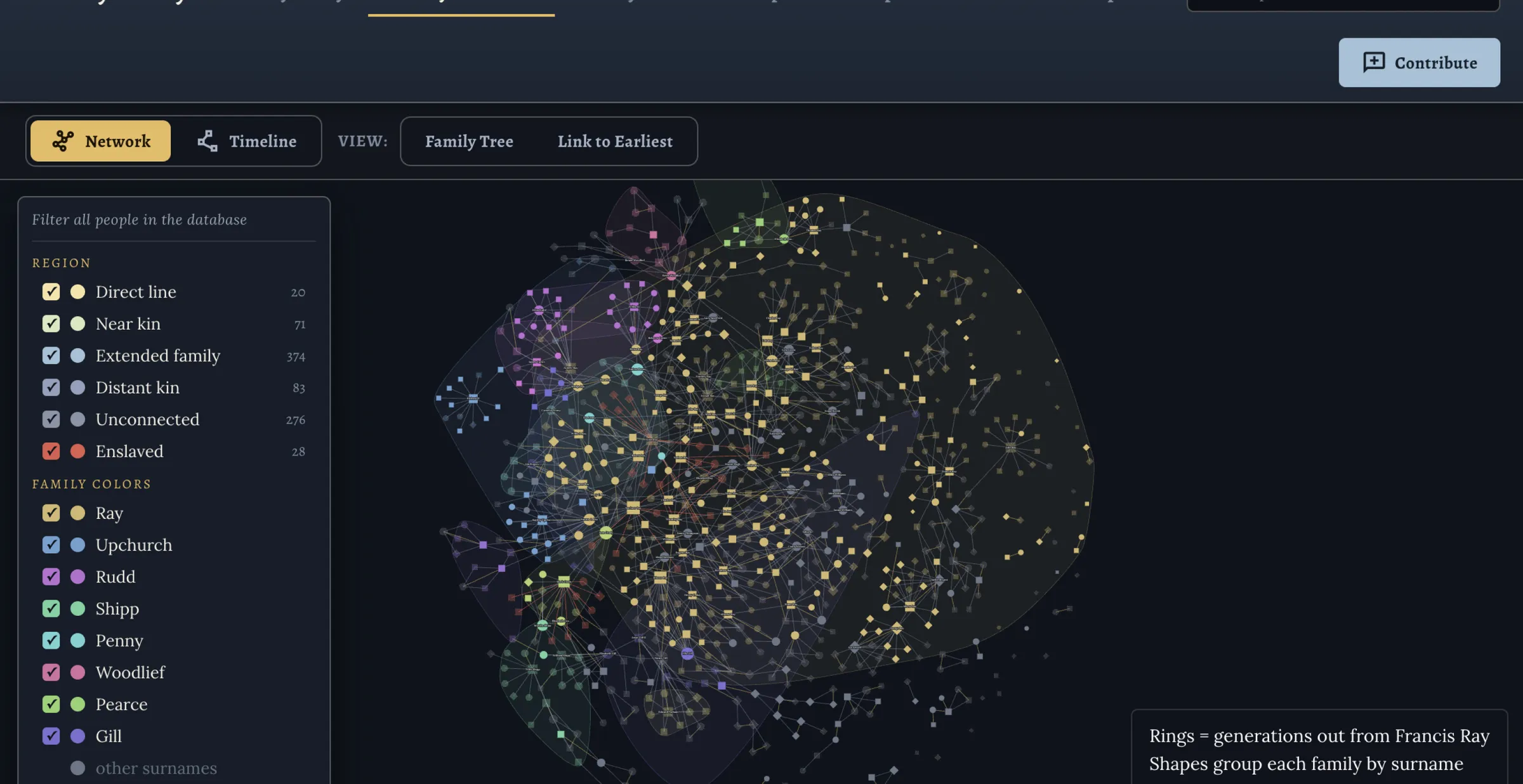
The result is a living, AI-assisted research pipeline and a website with seven ways in: a narrative history, a family network, descendant trees, lifespans, maps, a media archive and a register of everyone — all generated from one graph.
- Client
- Self-initiated with Jen Ray
- Year
- 2026
- Practice
- Jason Forrest Agency
- Role
- Research pipeline, graph database, data visualization, writing, web build
01 · The source
It started as handwriting in a binder.
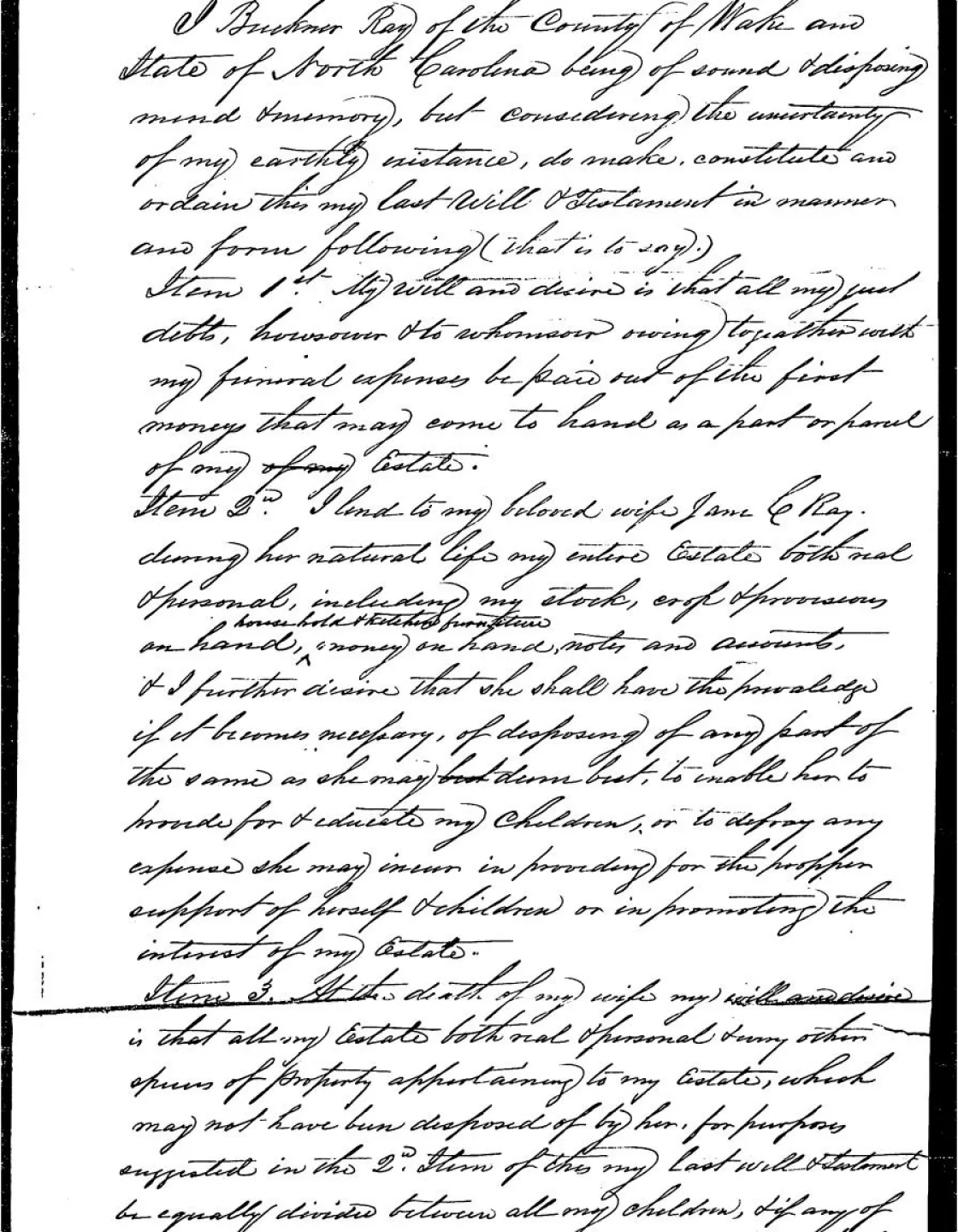
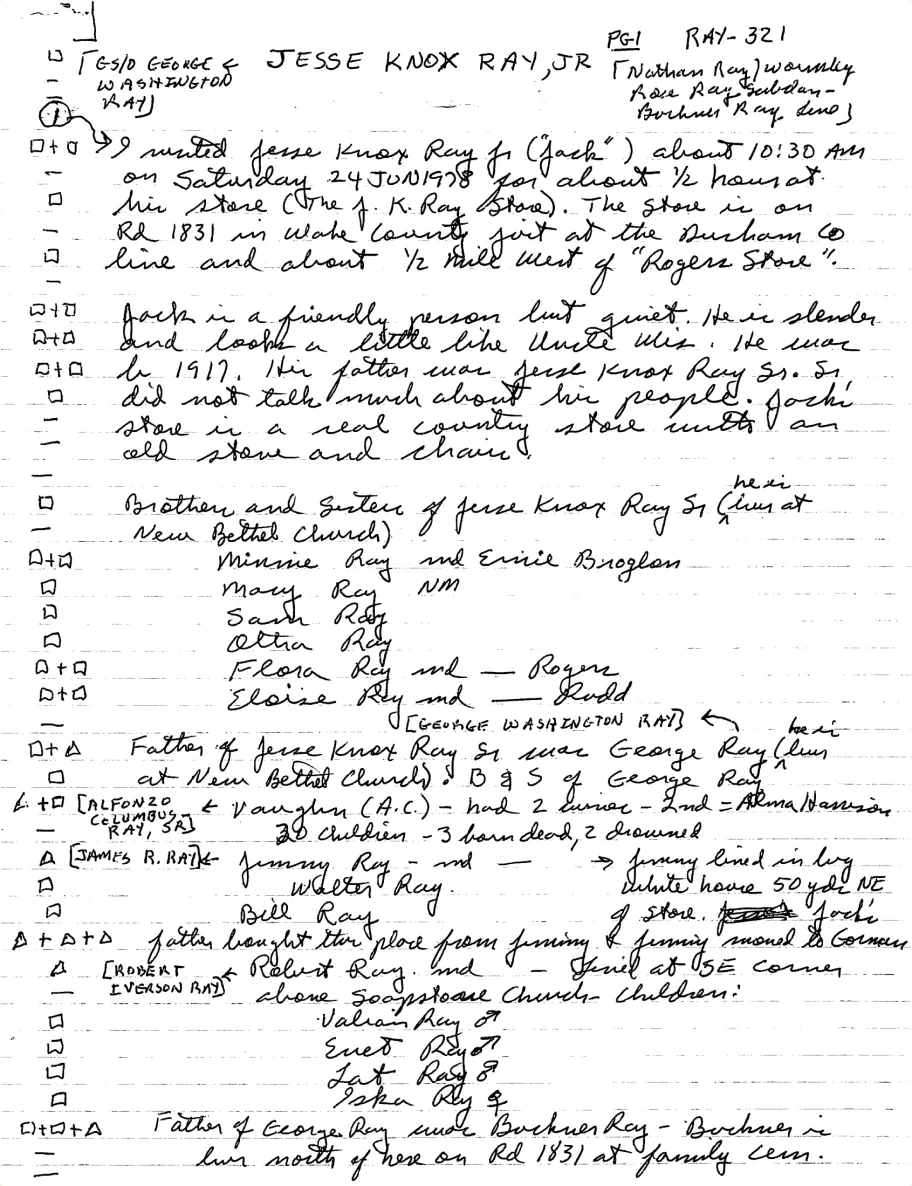
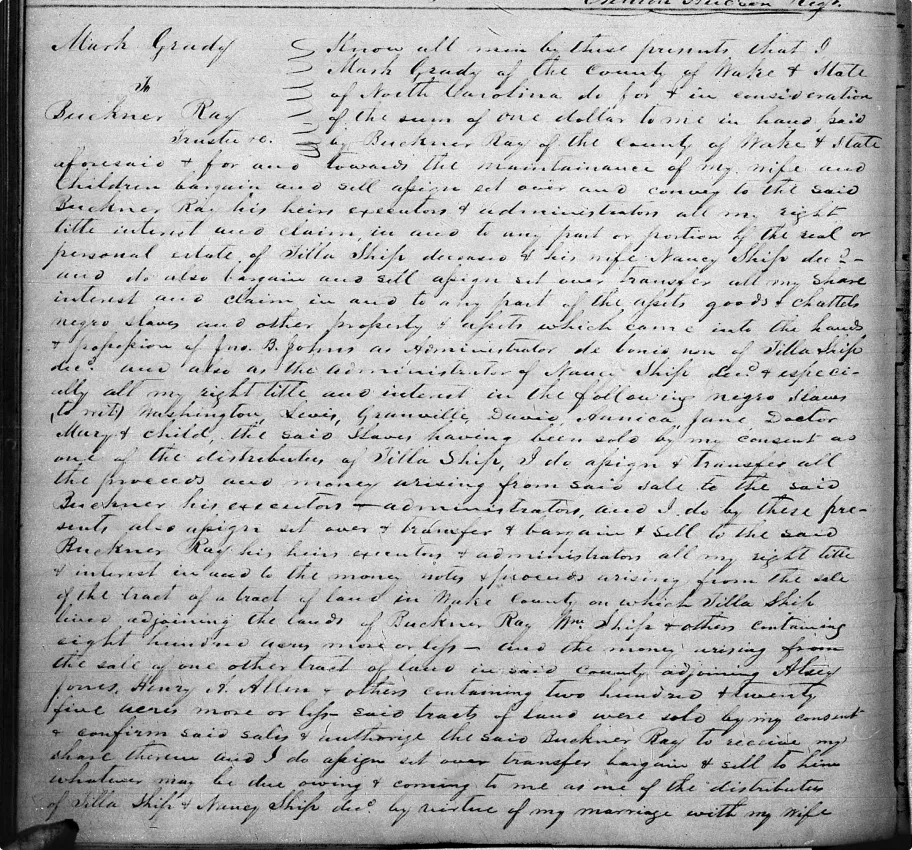
Robert Phillip Upchurch, a retired professor and dean, took up his family’s history in his seventies and gave it the last quarter-century of his life — driving the back roads of Barton’s Creek Township to stand at each grave, corresponding with cousins for years, transcribing deeds verbatim, and reducing all of it to filing systems of forensic care.
What he left runs to well over a thousand pages. The file on Buckner Ray alone fills fifty. Nathan Ray could not write his name — the clerk wrote it for him and Nathan set his ✕ between the two words. That mark is the only thing he left in his own hand, and it belongs to a man who assembled 192½ acres.
None of it was data. All of it was evidence.
02 · The method
Every fact travels the same road, and can be walked back.
An AI-assisted pipeline, but the discipline is old-fashioned: sources are immutable — never edited, only added. The database is a build artifact, regenerated from a script, never touched by hand. Nine automated gates verify the whole structure on every build. Unproven links carry an explicit certainty flag instead of being quietly promoted to fact.
- 01
Register
Each binder page, deed, will, pension file, obituary and interview is scanned and registered as an immutable source.
- 02
Transcribe
Verbatim transcription — 306,000+ words so far. Quoted phrases in the finished history come straight from these pages.
- 03
Extract
Facts are pulled into the graph’s own fields, each one cited back to the page it came from.
- 04
Verify
Nine gates per build: no broken links, no duplicated people, versions in agreement, certainty flags honoured.
- 05
Generate
Bios, timelines, maps, descendant trees — and the narrative history itself — are all written out of the graph.
03 · What came out
A 326-year story nobody had ever seen whole.
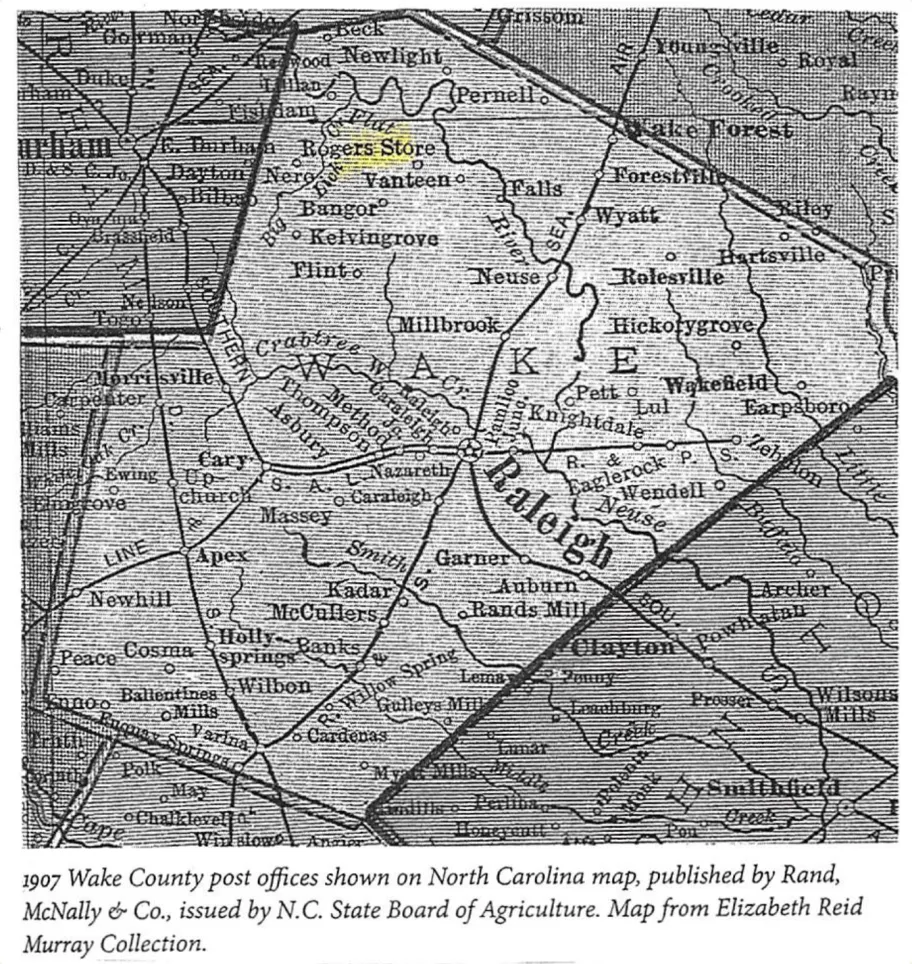
Individually, the binders held a family. Connected, they held a county — one patch of northern Wake County the family called “Ray Country,” a five-mile circle around a crossroads called Rogers Store that contained almost the entire story for a hundred and fifty years.
- 4,305
- pages of source documents, across 61 distinct sources
- 306,000
- words transcribed verbatim, none of it paraphrased
- 784
- people in the graph — 429 of them named Ray
- 10
- generations, from about 1700 to a child born in 2009
- 1,169
- nodes: people, places, events, documents, photographs
- 1,826
- relationships — parent-of, spouse-of, enslaved-by, buried-at
- 860
- images and scans, each tied to what it depicts
- 23
- enslaved people documented, with a chapter of their own
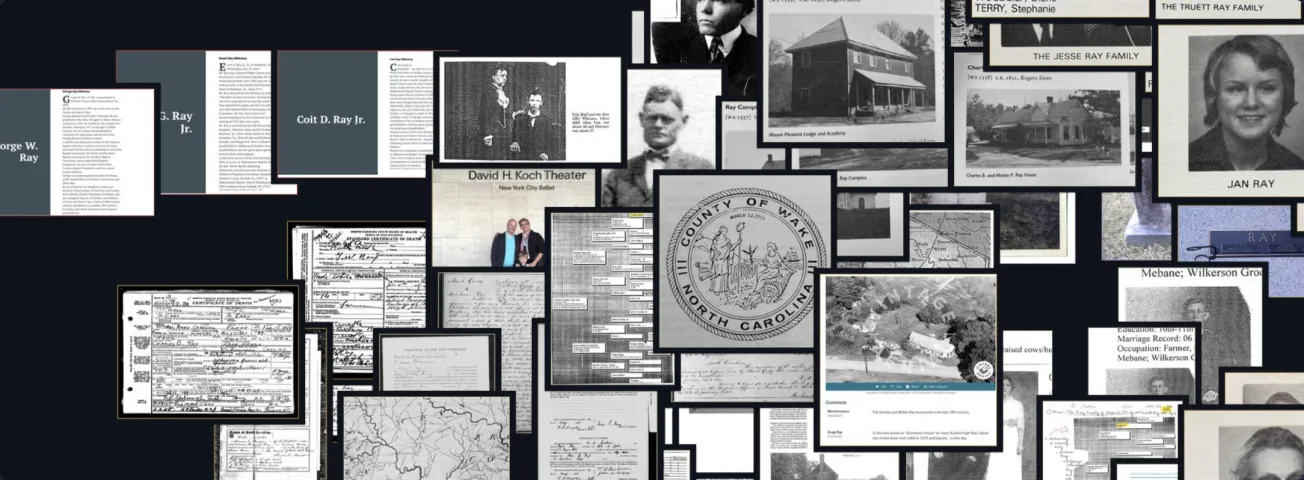
From the archive
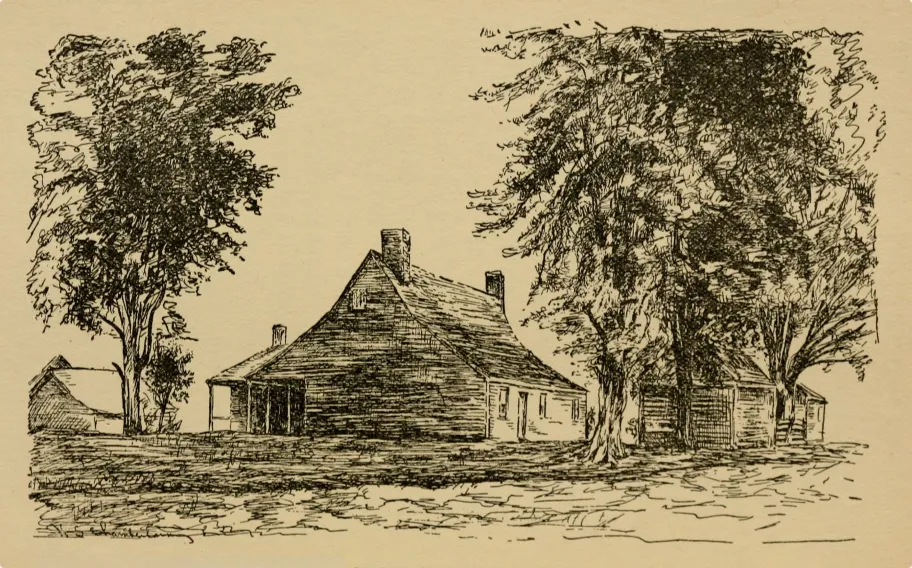
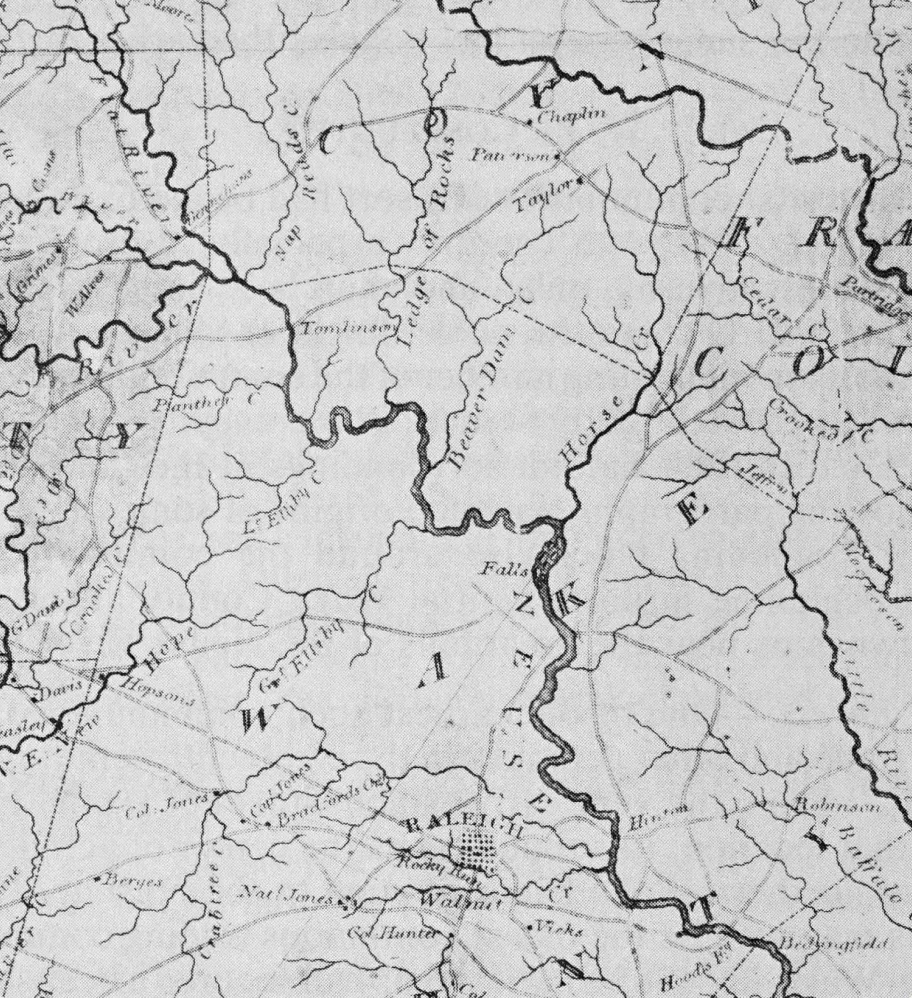
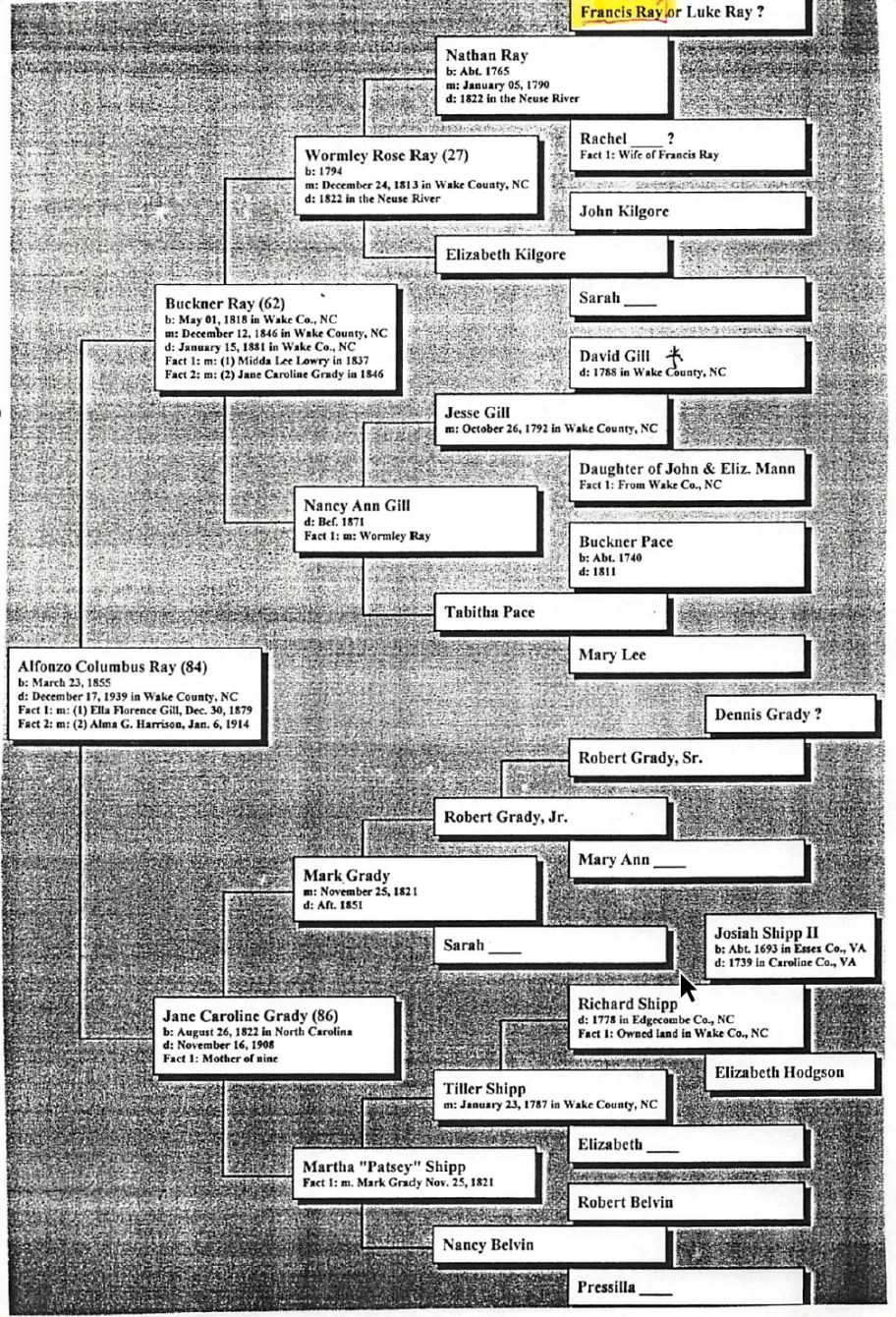
Deeds, maps, binders and photographs — every one tied to the people it shows.
04 · Built to be explored
Seven ways in, one source of truth.
Because everything is generated from one graph, no two views can disagree. Filter the network by surname, by region, by whether a link is proven — and the timeline, the maps and the biographies all answer to the same filter.
- Family Story — the narrative history, itself generated from the graph. Reading it, you are reading data.
- Family Network — 784 people as a force graph. Rings are generations out from Francis Ray; shapes group families by surname.
- Family Tree — descendant trees drawn from the same parent-of edges.
- Lifespans — every documented life as a bar against three centuries.
- Maps — Ray Country: Barton’s Creek Township, the Falls of the Neuse, and the land now under Falls Lake.
- Media — 860 scans and photographs, each linked to the people it depicts.
- All People — the full register, searchable, with certainty flags visible.
“So it would be accurate to say that you are currently reading data.”
- Made by
- Jen Ray and Jason Forrest, building on Jen’s family recollections and Jason’s work in data visualization and software.
- Standing on
- The research binders of Robert Phillip Upchurch; The Ray Family of Wake Co., NC (William Carroll Ray, 1999); Marl Ellis Ray’s cemetery maps and Ray Country tours.
- How it is built
- Immutable source registry → verbatim transcription → property-graph build script → nine verification gates → static generation. Nothing in the database is edited by hand.